Overcoming the fear of public speaking: What I Learned on Stage at Mindvalley U Tallinn
From Handing Off the Mic to Holding the Room
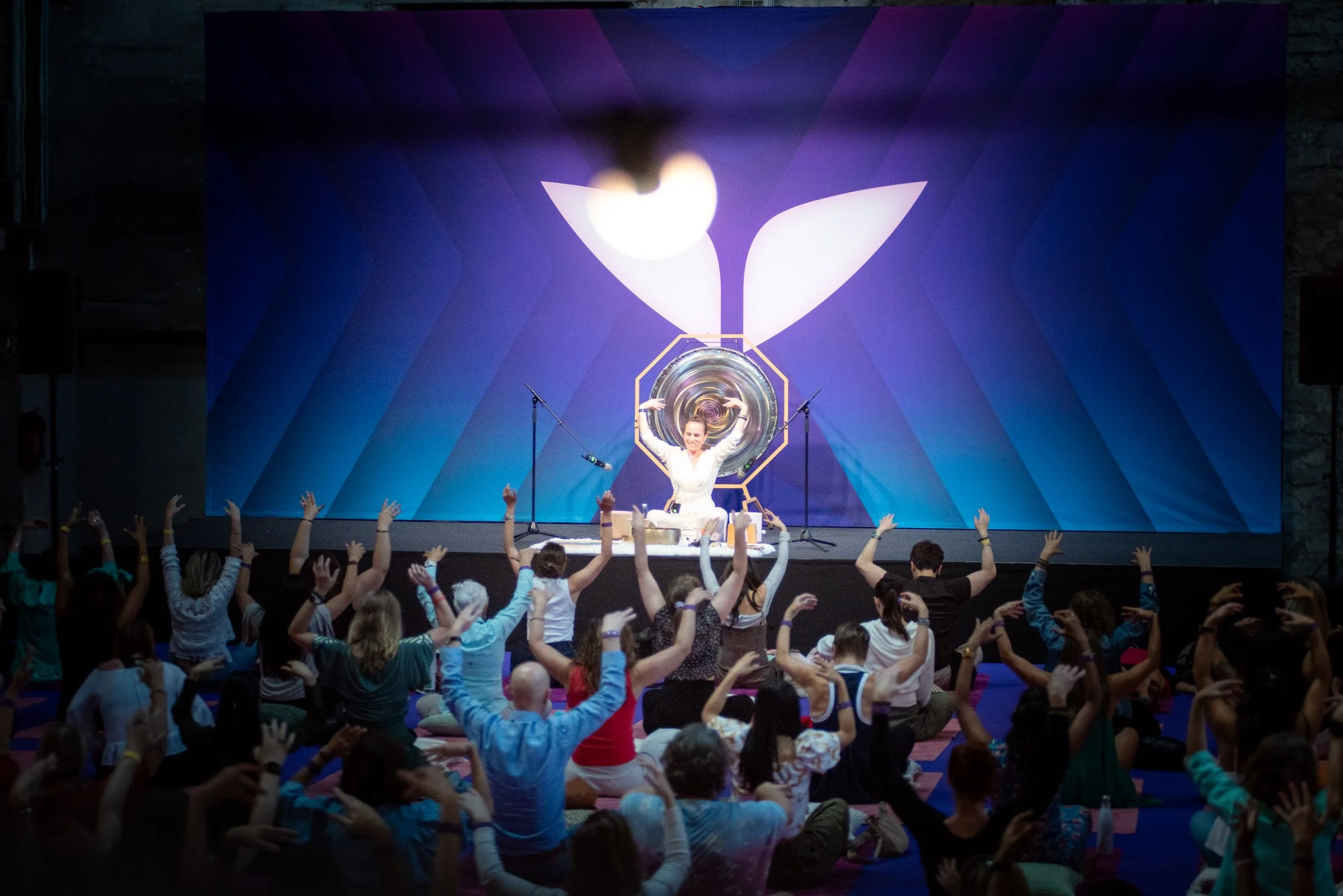
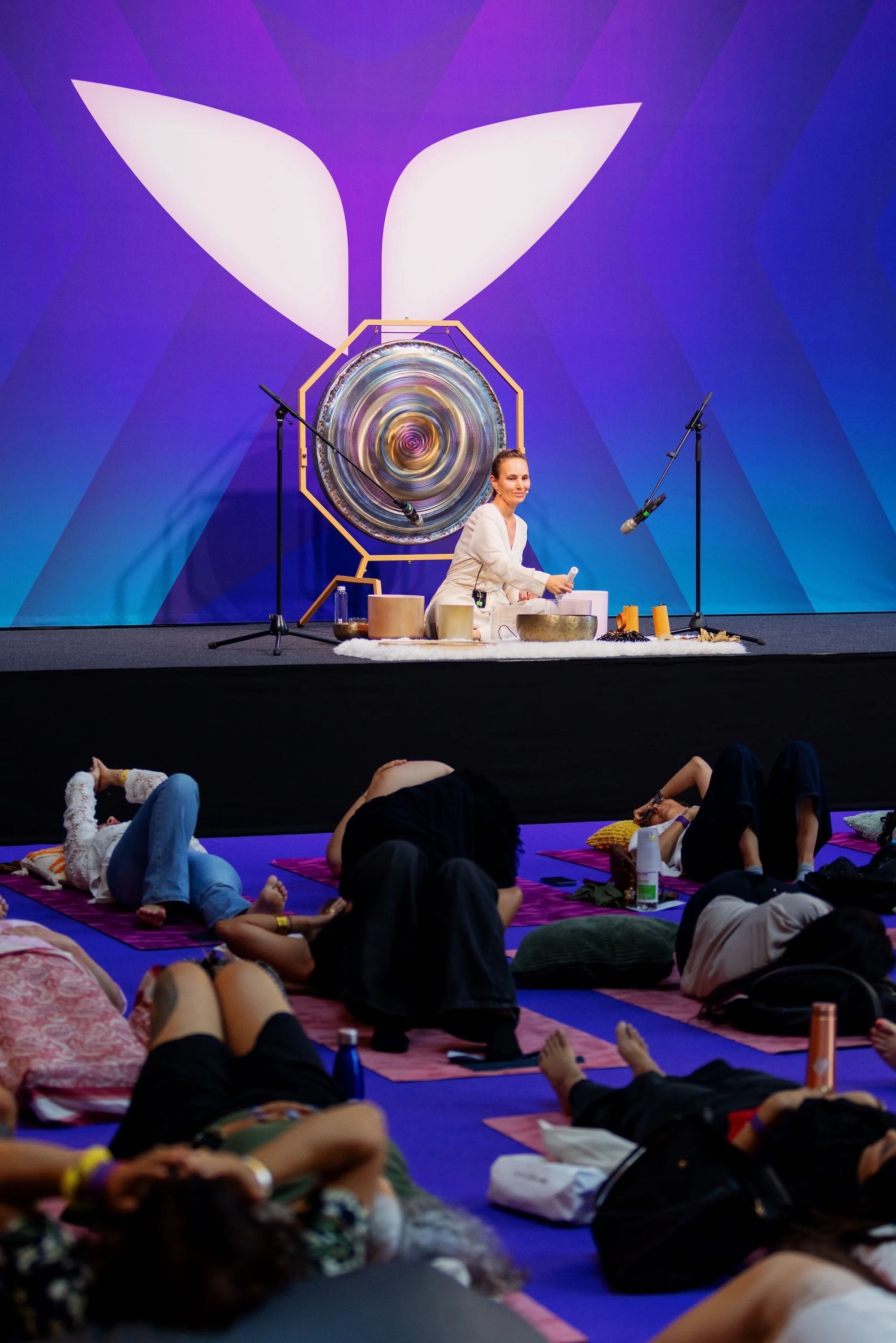
The first time I was hired to lead a corporate sound bath, I invited a friend and colleague to lead the meditation portion instead. I was too worried about getting nervous and getting it wrong in front of a paying client. The first time I did lead a session myself, in front of an audience of 300, my hands were visibly shaking. On July 30, 2026, I led a 60-minute Hypno-Sound Bath on the Embodiment stage at Mindvalley U Tallinn,sharing that week's lineup with Jim Kwik, Vishen Lakhiani,Rachel Pringle, Johann Urb, Jamie Sea, Maria Wendt, Eric Edmeades, Paul McKenna, Regan Hillyer, Shi Heng Yi, and Marisa Peer. It was the first time I felt fully in control of my emotions while speaking to a crowd.
That arc, from handing off the mic to holding a packed room, is the part worth talking about. Not because the room was packed, but because getting there took years, not a single moment of courage. It also meant sharing a program with Paul McKenna, the Mindvalley trainer widely regarded as the world's best-known hypnotherapist, in the same discipline I practice and teach.
A Fear Almost Everyone Carries
Various surveys put the share of people who feel some anxiety about public speaking at around 75 percent, making it one of the most commonly reported fears. The U.S. National Institute of Mental Health puts the past-year prevalence of specific phobias generally at roughly 9 percent of adults, so the gap between everyday nerves and a clinical phobia is real, even if the physiology behind both often overlaps.
That physiology is sympathetic nervous system activation: a faster heart rate, redirected blood flow, sharpened but scattered focus. It is the body preparing for a perceived threat, even when the threat is a room full of strangers rather than physical danger. None of that is a flaw to fix. It is a normal response that simply needs a way to settle once the perceived danger has passed.
A Self-Hypnosis Technique You Can Use Before Your Next High-Stakes Moment
As a Board-Certified Clinical Hypnotherapist, the tool that changed the most for me over the years is anchoring, a basic self-hypnosis technique. It works like this:
Choose one physical cue, such as pressing your thumb and forefinger together, or a single word repeated silently
Practice the cue during a genuinely calm moment, ideally a few minutes a day, so your nervous system starts pairing the sensation with calm
In the high-stakes moment, use the same cue paired with one slow, extended exhale, longer out-breath than in-breath, to signal safety to the nervous system
Repeat it, since the effect builds with repetition, not with a single use before a big moment
This is the practice I taught myself in the years between that first corporate booking and Tallinn. It is also what I teach hypnotherapy clients preparing for interviews, presentations, and difficult conversations, not just stages. The technique works because it does not try to argue the fear away. It gives the nervous system a familiar, rehearsed cue to reach for instead of spiraling.
What the Room in Tallinn Confirmed
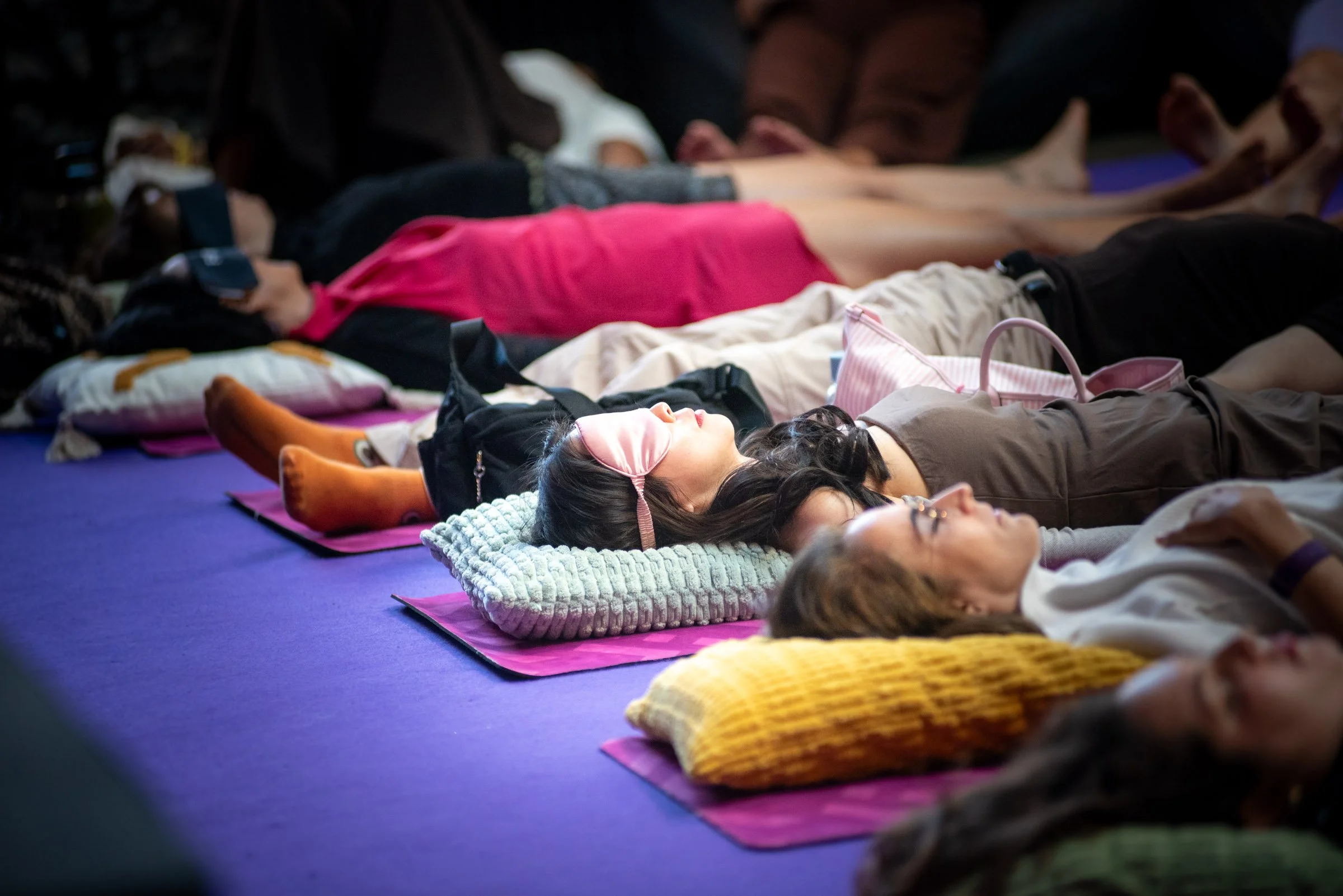
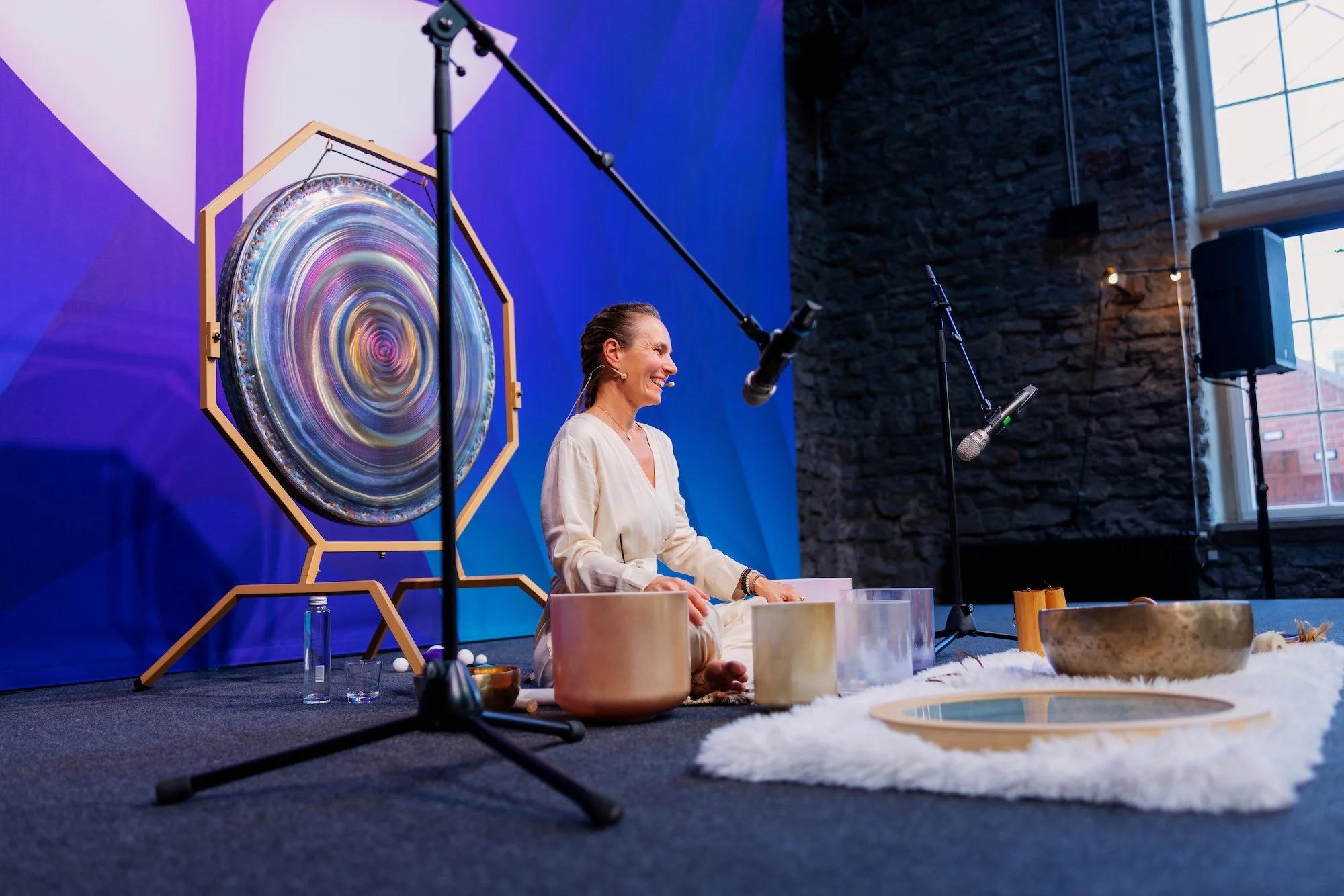
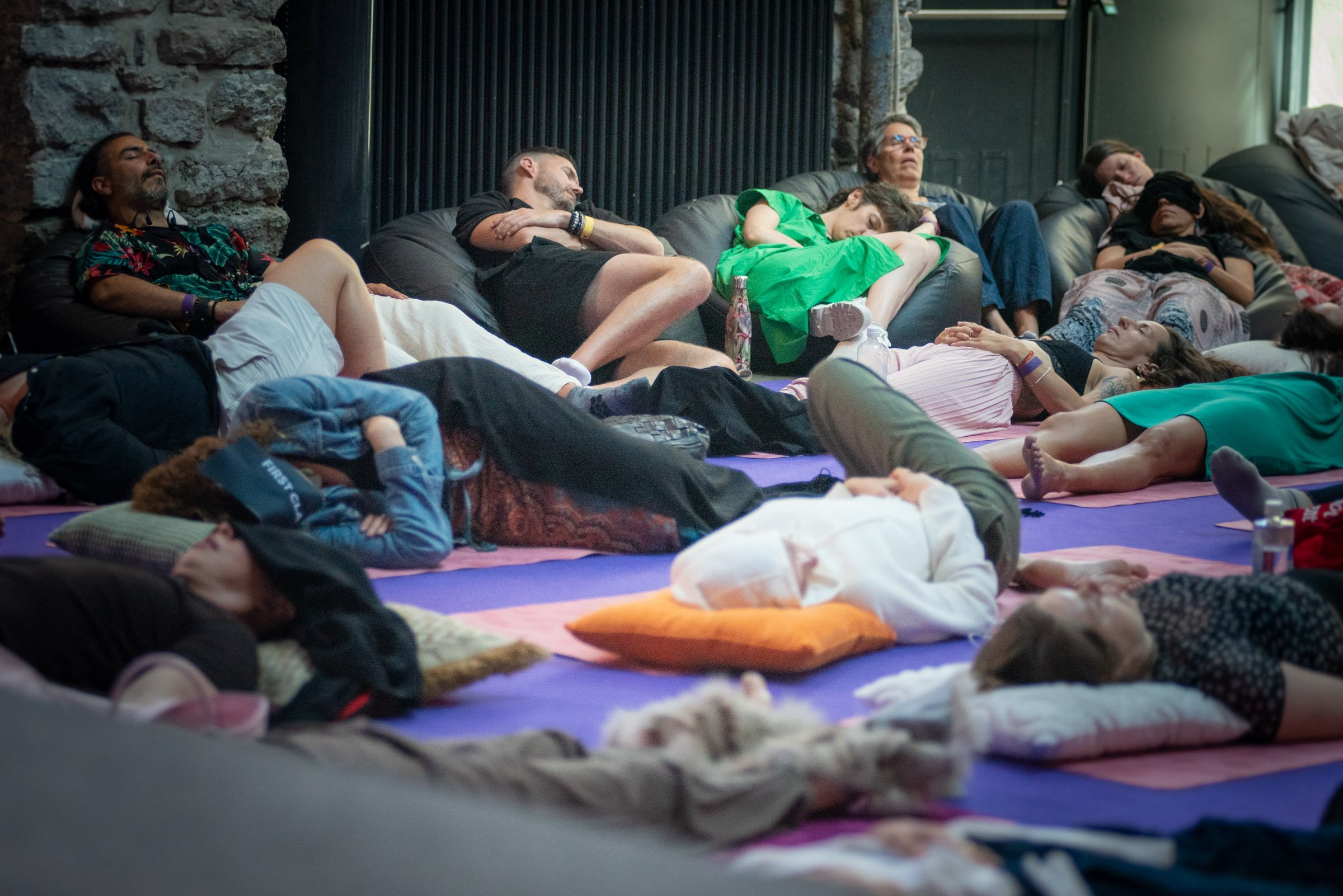
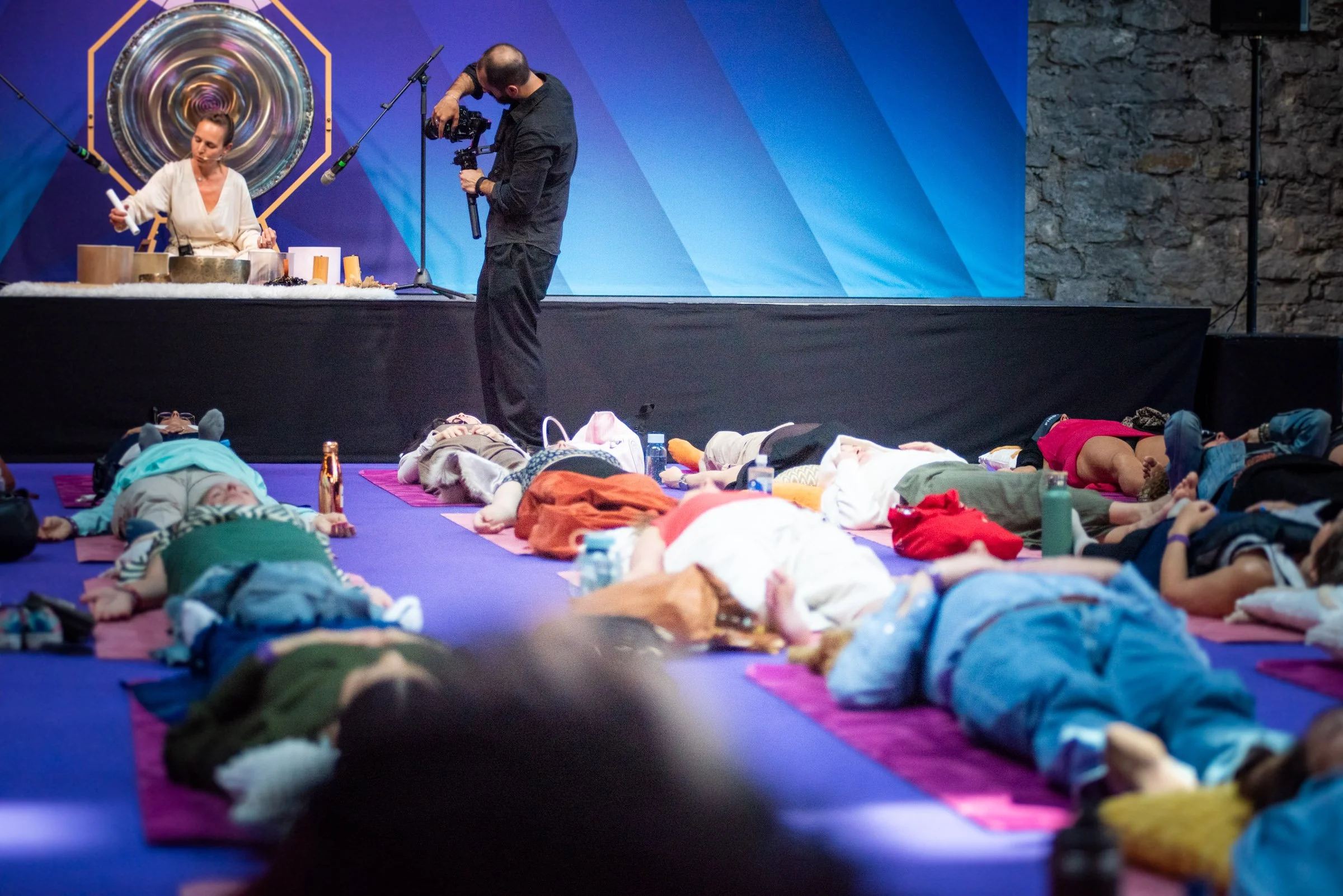
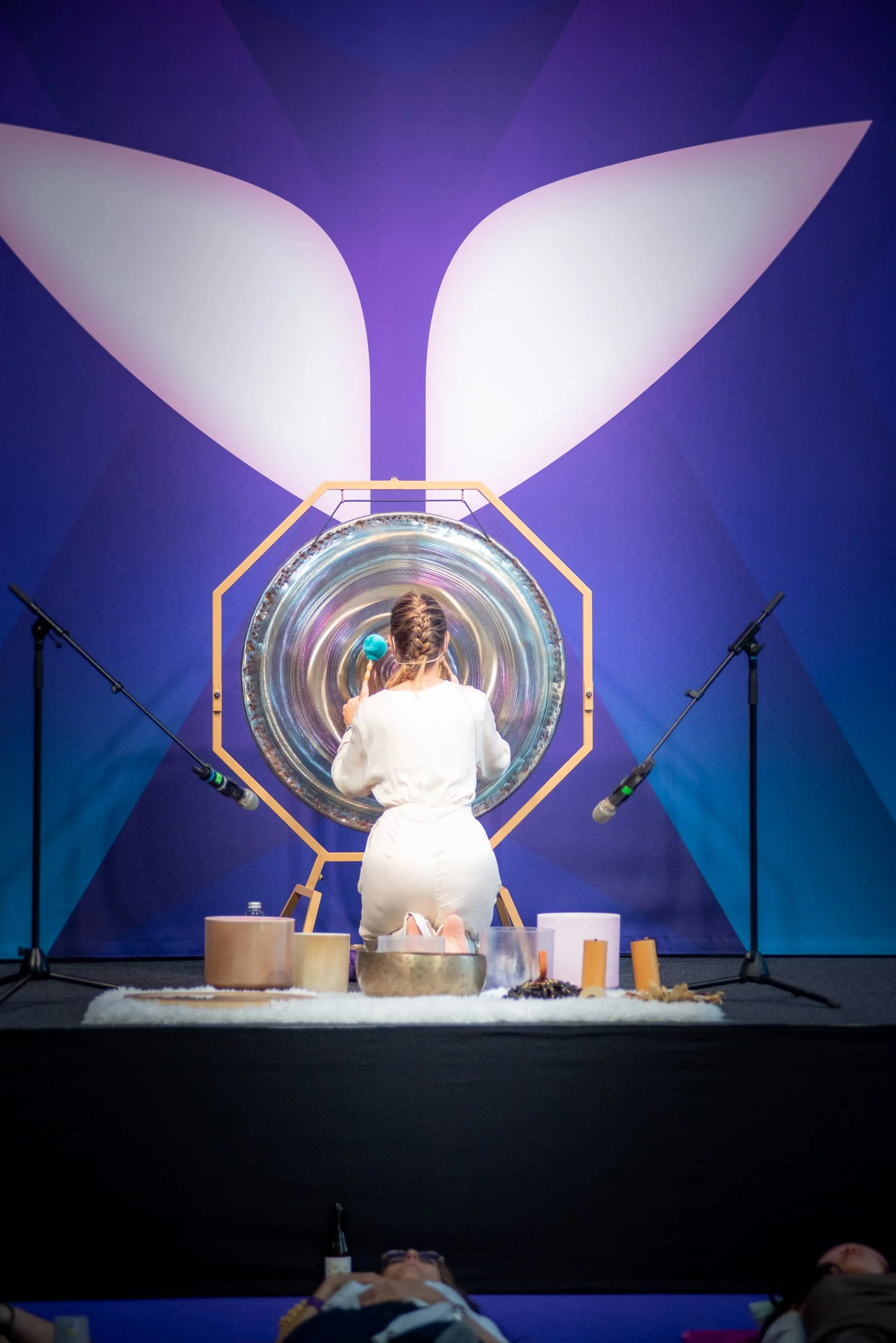
My session was scheduled in the same time slot as Jim Kwik, whose work centers on accelerated learning.I assumed stillness could not compete with performance and productivity on the same stage. The room filled well before the session began, and more than 100 people were turned away once it reached capacity, based on what I saw and was told at the door. Live instrumentation carried the session itself, including a Grotta Sonora gong alongside crystal alchemy bowls, an ocean drum, chimes, and Tibetan singing bowls, giving the room something to focus on outside their own heads.
Fear of public speaking rarely disappears completely. What changes, with years of practice, is how quickly the body finds its way back to steady, and how much of the room you can hold while it does.

Frequently Asked Questions
-
A.Very common. Multiple surveys estimate that around 75 percent of people feel some degree of anxiety about public speaking, making it one of the most widely reported fears. A smaller share, generally cited at around 5 to 10 percent, experiences a more severe, clinically significant form.
-
A. Anchoring pairs a physical cue, such as a gesture or word, with a calm state built through repeated practice. Once the nervous system associates the cue with calm, using it in a stressful moment can help trigger that same state on demand.
-
A. The sympathetic nervous system activates, raising heart rate, redirecting blood flow, and sharpening focus, the same fight-or-flight response triggered by physical danger. The body cannot always distinguish between a genuine threat and the perceived threat of being watched and judged.
-
A.A Hypno-Sound Bath combines clinical hypnotherapy with live sound healing instruments such as gongs and singing bowls. Guided hypnotic language brings the mind into a relaxed, receptive state while the sound supports the body's shift out of stress response and into rest, the same shift that helps regulate performance anxiety.
-
A. Hypnotherapy can help by rehearsing calm, focused states in advance, so the body has a familiar cue to draw on under pressure. It is typically used alongside practical techniques such as breathwork and preparation rather than as a standalone fix.