Founder Burnout: Why Recovery Is Half of Performance

On the final day of To The Peak 2026, the founder-first startup summit held in Bolzano from 9 to 11 September, the programme moved up the mountain. The summit is in its third edition and is an official Slush’D alumni event. At Rifugio Fronza alle Coronelle, 2,337 metres up at the foot of the Catinaccio in the Dolomites, Letizia Silvestri spoke to a room of founders and investors about burnout.
The Board-Certified Clinical Hypnotherapist, sound healer and founder of Altha shared the stage with Virginia Gambardella, founder and CEO of Qura, the AI-powered preventive health platform. The day, built by To The Peak co-founder Cristian Frigo, also featured Matteo Cammarata, kinesiologist and Starpool consultant, who lectures in sport sciences at the University of Florence.
The summit puts the subject on its agenda openly. It describes itself as a place to talk about success, failure and burnout.
What Causes Burnout in High Performers
Her opening point: burnout is not simply the result of working too much. It is what happens when recovery stops getting attention.
The mechanism she described is specific. The sympathetic nervous system, the part of the body built for short-term threat, stays switched on for months or years instead of hours. The World Health Organization also frames burnout as a problem of duration: the result of chronic workplace stress that has not been successfully managed, marked by exhaustion, growing distance from the job and reduced effectiveness.
Why Recovery Is Half of Performance
High performers, she told the room, do not burn out because they lack discipline. They burn out because they know only one half of performance: sprint after sprint, with no recovery built in.
In her words: “Recovery isn’t the reward for hard work, it’s the mechanism that makes the next sprint possible.” Sleep and nervous system regulation, in her view, are not separate from willpower. They are what willpower is built on.
Research on psychological detachment by organisational psychologist Sabine Sonnentag supports the point: people who mentally switch off from work in their free time recover better from job stress.
She learned this firsthand. Before founding Altha, she spent 18 years running high-stakes events for luxury automotive brands, until her own body forced the lesson.
A Hypno-Sound Bath at 2,337 Metres: How Regulation Feels
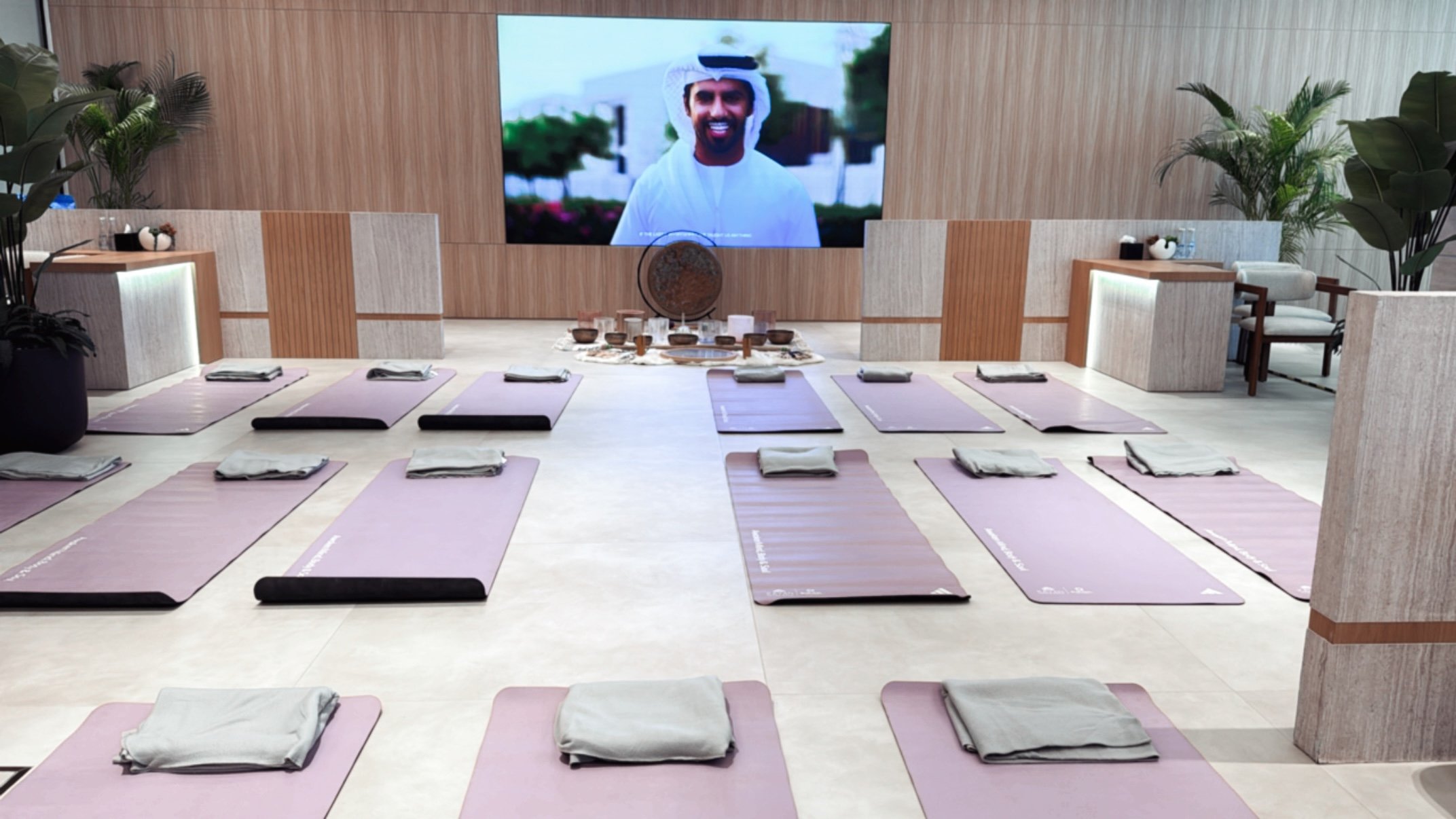
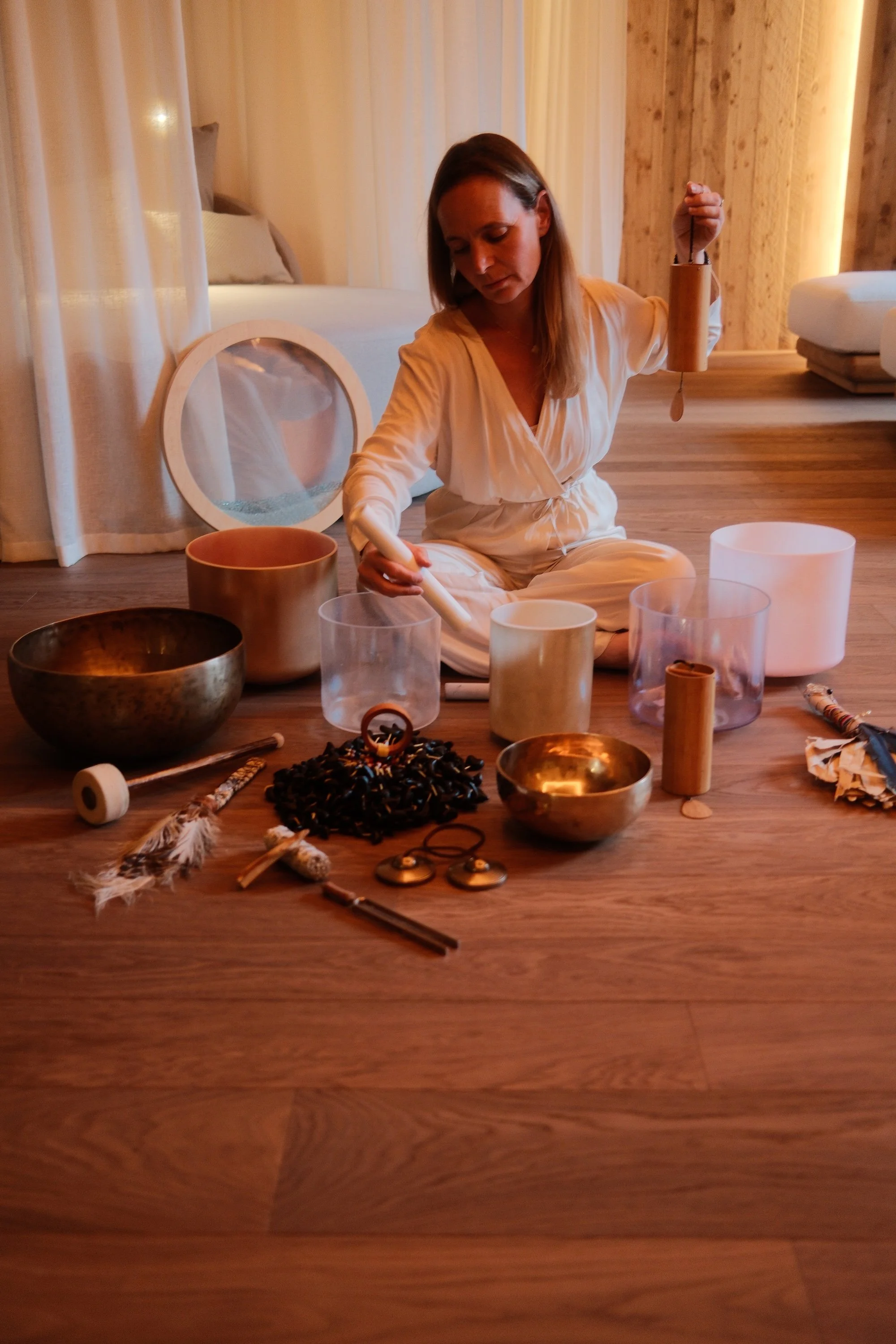
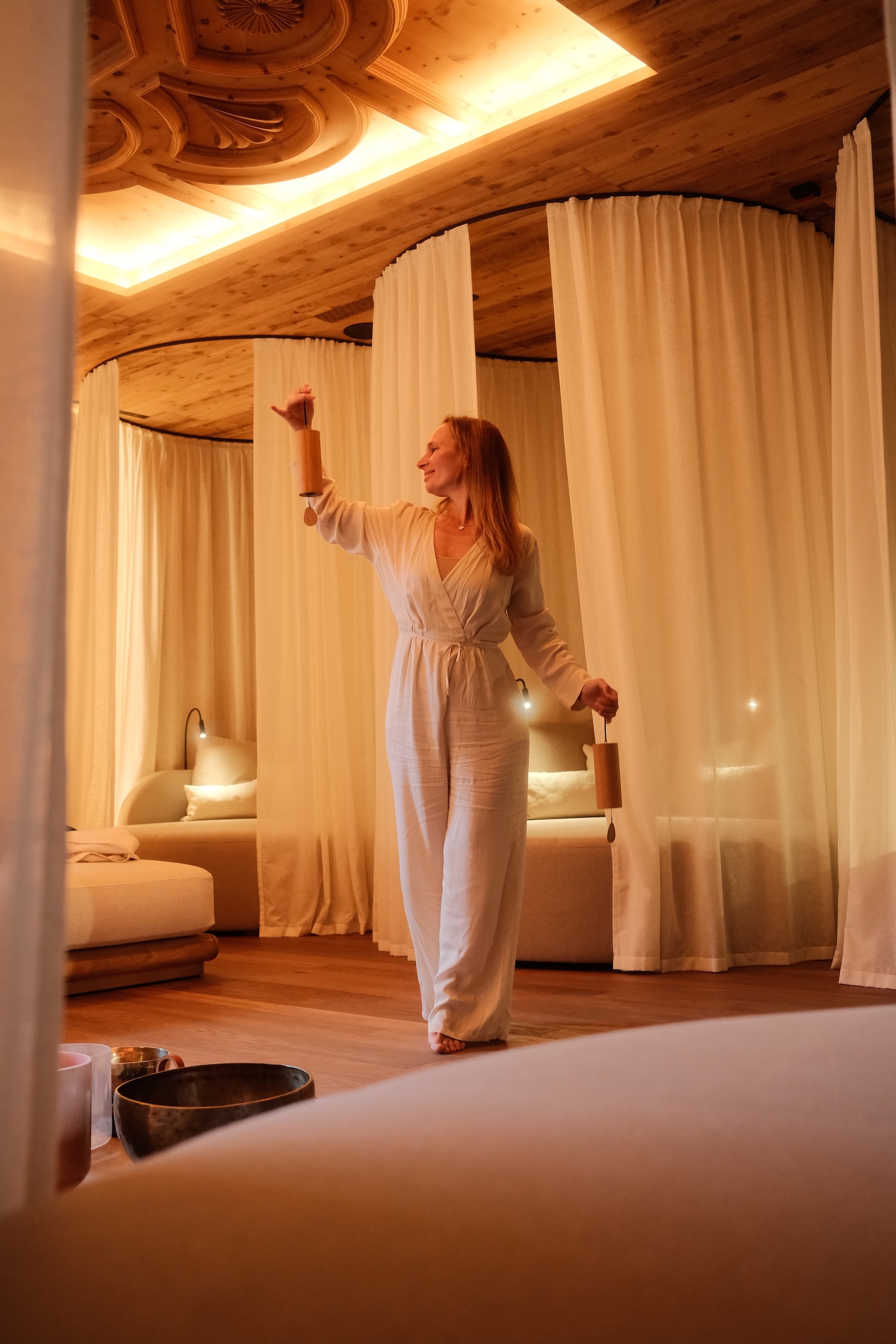
After the talk, Letizia Silvestri led a short Hypno-Sound Bath right there on the mountain, with a Grotta Sonora gong. Her reason: “Regulation isn’t something you understand from a slide. It’s something you have to feel.”
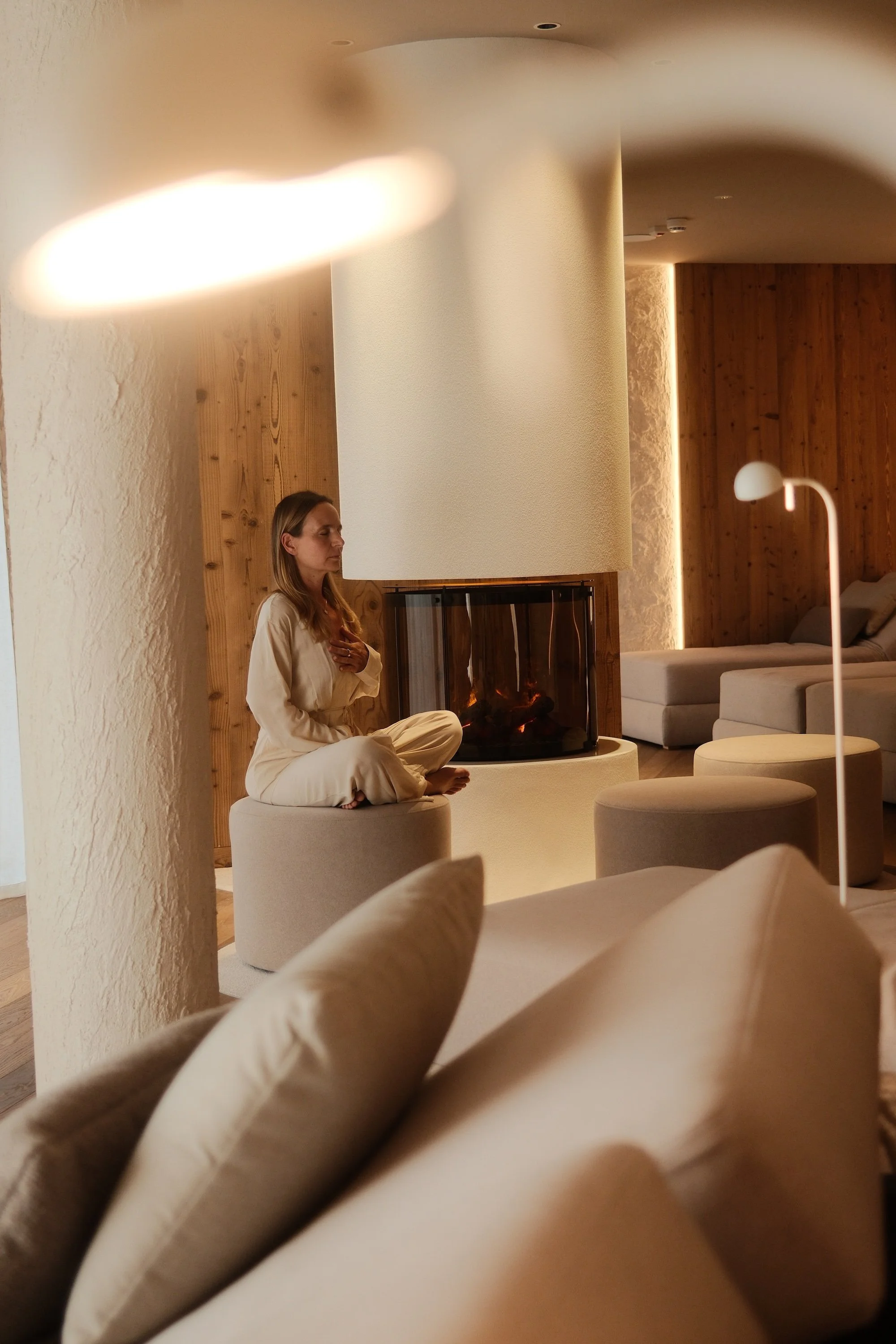
The Hypno-Sound Bath, her signature method, combines clinical hypnotherapy with live sound healing. Clinical hypnosis is a state of focused attention in which awareness of the surroundings recedes and the mind becomes more responsive to suggestion. Guided hypnotic language holds that focus while the sound gives the nervous system one steady signal to follow, helping the body shift out of alert mode. In one early study, participants reported less tension and fatigue after a single singing bowl session. A full session runs 60 minutes, and on the mountain founders and investors experienced a shorter version. One session can be restorative. Lasting change through hypnotherapy typically takes six to eight.
For both the altitude and the stage, she was dressed by LaMunt, the Bolzano mountain sports brand created by women for women. Founded by Ruth Oberrauch, it takes its name from the Ladin word for mountain. Its idea of Mountain Me-Time, time in the mountains taken for yourself, is one Letizia Silvestri shares.
How to Build Recovery Into a Working Week
Four ways to apply this:
Schedule recovery first. Put sleep and downtime in the calendar before the week fills up.
Protect sleep. Keep consistent hours, a dark and cool room, and no screens for the last hour of the day.
Regulate daily. Five to six minutes of self-hypnosis or slow breathing is enough once the technique is learned.
Recover between sprints. After a launch or a funding round, plan lighter days before the next push.
Letizia Silvestri describes this as the work she does “whether the room is a boardroom or a mountain.” She speaks on burnout and leads Hypno-Sound Bath sessions for founders, leadership teams and corporate wellness programmes across Europe. Upcoming dates are listed at altha.com/events.
Frequently Asked Questions
-
A. Slow living means doing fewer things with more attention, often outdoors and away from screens. It has not been tested as a single intervention, but its parts, including time in nature, manual activity and contact with animals, are each associated with better wellbeing or lower stress markers in published research.
-
A. The World Health Organization lists three: feelings of energy depletion or exhaustion, increased mental distance from or cynicism about the job, and reduced professional efficacy. Anyone with persistent symptoms should speak to a doctor or licensed mental health professional.
-
A. A sound bath can support recovery by giving the nervous system a structured period of rest. Early research reports lower self-rated tension and fatigue after a session. It is not a standalone treatment for burnout, which also requires changes to workload, sleep and recovery habits.
-
A. The Hypno-Sound Bath is Letizia Silvestri’s signature method. It combines clinical hypnotherapy with live sound from gong, crystal alchemy bowls, Tibetan singing bowls, ocean drum and chimes. A full session runs 60 minutes.
-
A. Yes. In 2026 her engagements included To The Peak in Bolzano, Mindvalley U in Tallinn and Cortina in Wellness, alongside sessions for luxury hotels including Mandarin Oriental properties. Upcoming dates and locations are listed at altha.com/events.