What UAE Summer Heat Actually Does to Your Nervous System, According to the Research
By June, stepping outside in Dubai or Abu Dhabi can feel like walking into a wall. What gets discussed less is what that heat is actually doing to the nervous system, not just the body's temperature. The irritability, the shortened patience, the harder time concentrating through a UAE summer are not just in your head. There is a documented physiological mechanism behind them, and a UAE-specific study published in 2024 puts real numbers on it.

What the Research Actually Found in the UAE
A 2024 study in the journal Cureus surveyed 397 adults living in the UAE about their heat exposure and health. The findings were notable: 86.4 percent reported symptoms of heat exhaustion, and a significant share also reported anxiety, 45.1 percent, depression, 35.5 percent, and stress, 11.6 percent, using a validated mental health screening scale. It is worth being precise about what this study can and cannot tell us. It is a cross-sectional survey relying on self-reported symptoms, not a controlled trial proving heat directly causes these conditions, but it is a real, UAE-specific data point showing how widely heat-related distress is already being experienced in this exact climate.
How Heat Actually Affects the Nervous System
This is not purely psychological. A separate, controlled study on ambient temperature found that even moderate increases in room temperature significantly raised cortisol levels and other markers of stress system activation, including heart rate and blood pressure, without people necessarily reporting feeling more stressed. In other words, heat can activate the body's stress response below conscious awareness. You may feel fine while your physiology is already working harder.
The underlying mechanism makes sense: as ambient temperature rises, the body diverts energy and attention toward thermoregulation, sweating, increased heart rate, and blood flow redistribution toward the skin. This is metabolically demanding work, and it draws on many of the same physiological systems involved in the stress response. A nervous system working overtime to keep you cool has less capacity left for emotional regulation, focus, and patience.
Practical Support for the Nervous System This Summer
A few evidence-aligned approaches worth building into a UAE summer routine:
Hydrate consistently, not reactively. Thirst is a late signal that dehydration has already begun. Drinking water steadily through the day, rather than only when thirsty, supports both physical cooling and nervous system capacity.
Limit caffeine and alcohol during peak heat exposure. Both have a diuretic effect that can compound fluid loss, adding physiological strain on top of heat stress.
Protect the coolest hours for demanding tasks or decisions. If concentration and patience are measurably harder to access in heat, scheduling difficult conversations or focused work for cooler parts of the day is a practical accommodation, not a luxury.
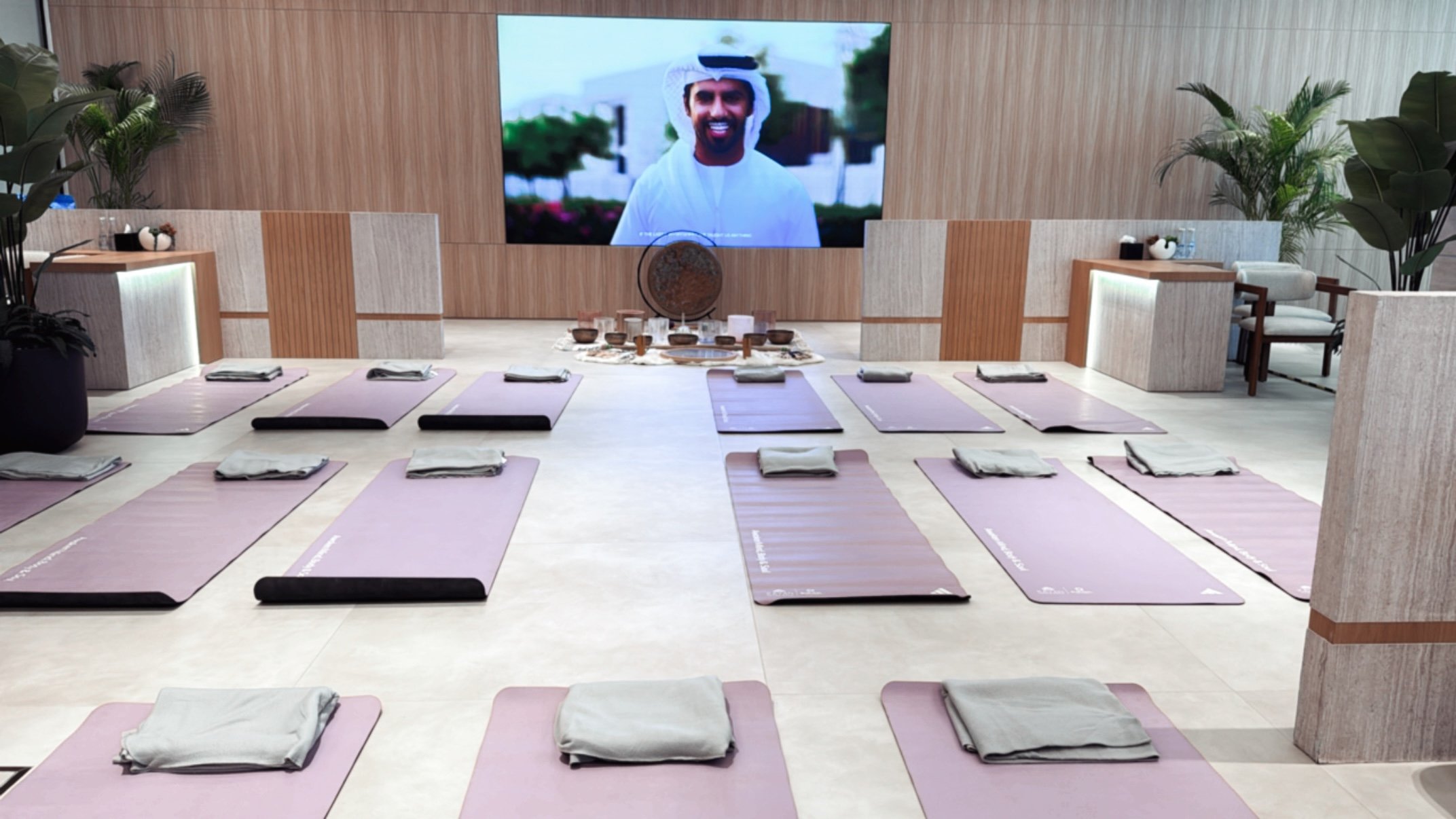
Build in deliberate down-regulation, not just air conditioning. Cooling the environment helps, but it does not automatically reset a nervous system that has been working hard. Practices like slow breathing, sound bath sessions, or other somatic approaches give the body an active signal to shift out of alert mode, rather than passively waiting for the heat to pass.
Treat indoor wellness time as seasonal, not optional. Many wellness events in Dubai and Abu Dhabi shift indoors or to climate-controlled formats over summer for good reason. Reduced outdoor activity during peak heat is a sensible adjustment, not a sign of giving something up.
When to Take It Seriously
Heat exhaustion symptoms, heavy sweating, weakness, nausea, headache, or a rapid pulse, should be treated as a signal to cool down and rehydrate immediately. Heat stroke, marked by a very high body temperature, confusion, or loss of consciousness, is a medical emergency requiring immediate care. The psychological symptoms are real too. If irritability, anxiety, or low mood are noticeably worse through the summer months and not resolving with basic adjustments, it is worth mentioning to a doctor rather than assuming it will simply pass with the season.
UAE summers are intense by design, not by accident, and a body working that hard to stay regulated deserves more support than willpower alone. Recognizing heat as a genuine nervous system stressor, not just a discomfort to push through, is the first step toward actually managing it.






Frequently Asked Questions
-
A. Yes. A 2024 study surveying 397 adults in the UAE found high rates of self-reported heat exhaustion alongside anxiety, depression, and stress symptoms, using a validated screening scale. It is a survey rather than a controlled experiment, so it shows association rather than strict causation, but it is real, regionally specific evidence that heat-related distress is widespread here.
-
A. Controlled research has found that moderate increases in ambient temperature measurably raise cortisol and other stress markers, sometimes without a corresponding increase in how stressed someone feels they are. This suggests heat can activate the body's stress response even when you do not consciously notice it happening.
-
A. The body redirects significant energy toward thermoregulation in high heat, drawing on physiological systems that overlap with the stress response. This leaves less capacity available for emotional regulation, sustained focus, and patience, which is a plausible mechanism behind commonly reported summer irritability.
-
A.Heavy sweating, weakness, nausea, headache, or a rapid pulse are signs of heat exhaustion and should prompt immediate cooling and rehydration. A very high body temperature, confusion, or loss of consciousness indicates heat stroke, a medical emergency requiring urgent care.
-
A. Indoor, climate-controlled formats make the most sense during peak heat. Altha's sound bath Dubai and sound bath Abu Dhabi sessions, along with hypnotherapy and other somatic practices, are held in cooled venues year-round, with current wellness events Dubai and Abu Dhabi listings available at altha.com/events.