Closing the Season: What Resilience Actually Looks Like in the Body
A pair of peacocks were wandering the grounds while the instruments were being set up for the final floating Hypno-Sound Bath of the season at Mandarin Oriental Emirates Palace, unbothered by the activity, in no hurry to be anywhere else. The series pauses for the summer after this gathering and returns September 25.

A Season Closing, Not Ending
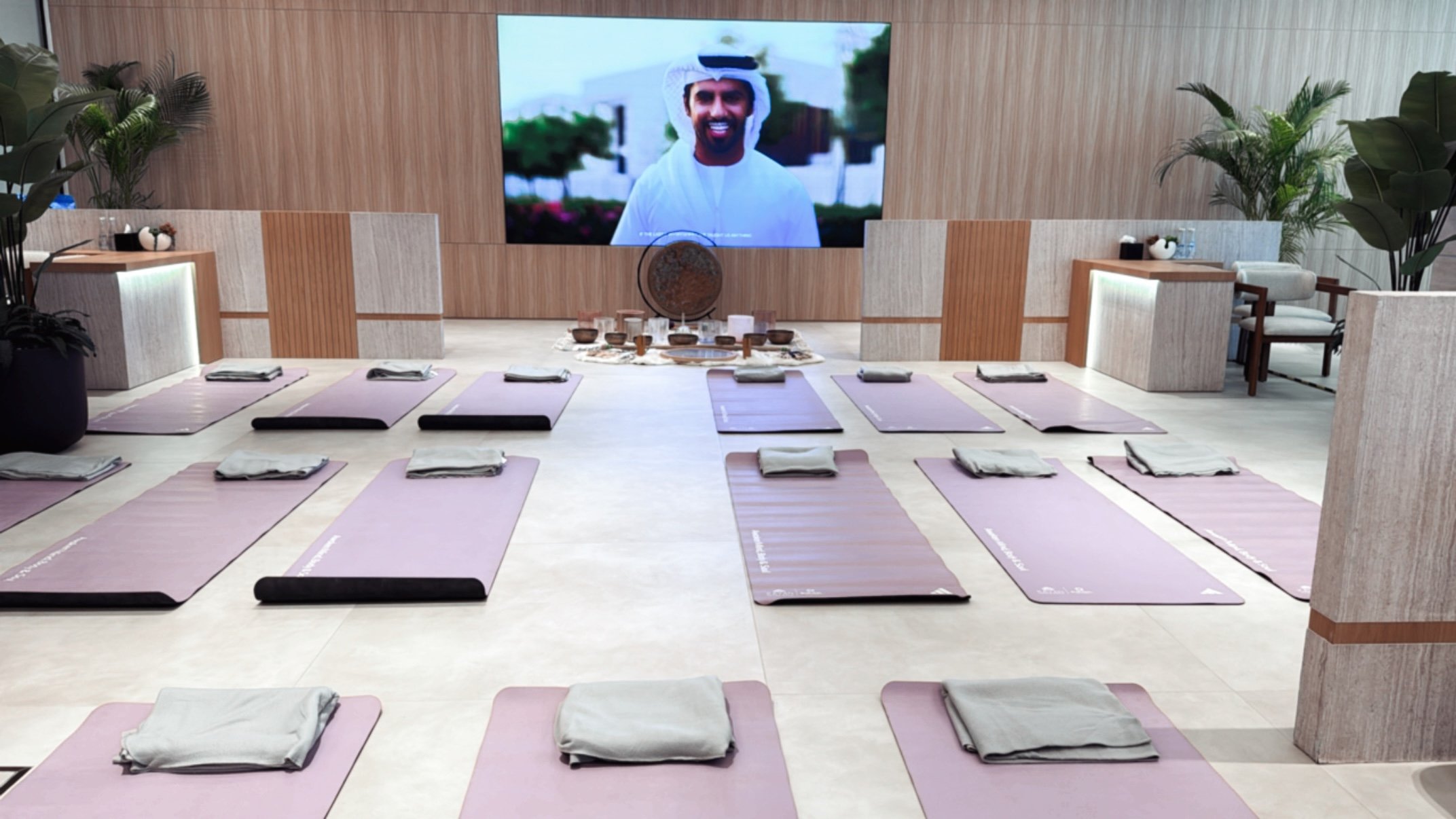
This was the third floating Hypno-Sound Bath at Mandarin Oriental Emirates Palace this season, again hosted by Altha in partnership with Beyond Wellness. Guests floated on individual mats on open water through a guided sound journey, with instruments moving through gongs, singing bowls, and chimes alongside spoken guidance.
Closing a series is its own kind of practice. There is a temptation to treat a pause as a loss, an ending that needs justifying. The more accurate frame, and the one worth carrying into the summer, is that resilience is not built in a single session. It is built in cycles, exposure, recovery, and return, repeated over time.
What Resilience Actually Looks Like in the Body
Resilience is often discussed as a fixed trait, something a person either has or does not. The research increasingly points elsewhere. A 2026 study examining the autonomic nervous system's response to repeated stress exposure found that resilience showed up specifically in how well the body's heart rate adapted across multiple stress events over time, not just how well someone recovered from a single one. In other words, resilience is something the nervous system practices and gets better at, much like a muscle responding to repeated, manageable load.
This reframes what a recurring practice like a sound bath is actually doing. Each session is not an isolated event that needs to produce results on its own. It is one repetition in a longer pattern the nervous system is learning: activation, sound, stillness, return to baseline. The value compounds less through any single evening and more through the rhythm of returning to it.
Where Therapeutic Hypnosis Fits Into That Pattern
Hypnotic guidance, layered into a sound bath the way it is in a Hypno-Sound Bath, works on a similar principle of repetition rather than a single decisive moment. The subconscious mind responds to imagery and suggestion most reliably through return and reinforcement, not a single exposure. A guided line offered once during a session can plant something; it is the body encountering that suggestion again, in a state of genuine physiological safety, that tends to let it actually settle into a more durable shift.
That is part of why a single sound bath can feel meaningful in the moment, and why a recurring practice tends to be what actually changes a baseline over months, not one evening. Both things are true at once, and neither cancels the other out.
Carrying This Into the Summer Pause
A few honest notes for the months before the series resumes:
A pause in a practice is not the same as losing its benefit, provided the underlying skills, breath, grounding, somatic awareness, continue in some form
Resilience built through repeated, manageable exposure to sound and stillness tends to generalize. The nervous system that has practiced returning to baseline in a floating sound bath carries that capacity into less calm settings too
What's Next
The floating Hypno-Sound Bath series resumes at Mandarin Oriental Emirates Palace on September 25. Until then, the invitation is the same one the practice has offered all season: not a single fix, but a rhythm worth returning to. Details for September and the rest of the autumn calendar will be available at altha.com/events.






Frequently Asked Questions
-
A. Current research suggests resilience is largely trainable rather than fixed. A 2026 study found that resilience specifically relates to how well the autonomic nervous system adapts across repeated stress exposures over time, not just how someone handles a single difficult event, which points to it being a capacity built through practice.
-
A. A single session can offer genuine, immediate relaxation and relief. Lasting changes to a person's baseline nervous system regulation, however, tend to come from a recurring practice rather than a one-time visit, similar to how physical resilience builds through repeated, manageable exposure rather than a single workout.
-
A. In a Hypno-Sound Bath, hypnotic guidance is layered over therapeutic sound to support the subconscious mind in working with suggestion and imagery, while the sound and water support the physical relaxation needed for that guidance to land. The hypnotic element tends to work best with repeated exposure, similar to other forms of hypnotherapy.
-
A.The floating Hypno-Sound Bath series at Mandarin Oriental Emirates Palace takes its usual summer break and resumes on September 25. Updated details for the autumn calendar of wellness events Abu Dhabi will be posted at altha.com/events.
-
A. Continuing the underlying skills in some form, breathwork, grounding, somatic awareness, or a self-hypnosis practice, helps maintain the benefits built over a season of regular sessions, even when the specific format of a floating sound bath is not available.