What Science Actually Knows About Sound Healing, and What It Doesn't Yet
Sound healing sits in an unusual spot. It is old enough as a ritual practice to feel timeless, and new enough as a research subject that the science is still being written. Both things can be true at once, and conflating them, treating an evidence gap as proof of either fraud or magic, does a disservice to a practice that has real, measurable effects alongside genuine open questions.

What the Evidence Actually Supports
The most recent comprehensive look at this field is a 2025 scoping review in JMIR Mental Health, which examined 34 peer-reviewed studies on sound and music interventions for stress, using physiological markers like cortisol, heart rate variability, and blood pressure alongside self-reported outcomes. The consistent finding across this body of work: sound and music interventions are associated with measurable reductions in physiological stress markers and self-reported anxiety, particularly with self-selected or classical music and natural soundscapes.
This is a genuinely meaningful finding. It is not, however, the same as proof that a specific instrument, frequency, or ritual produces a specific physiological outcome. The review's authors, like most researchers in this space, are explicit that the evidence base, while consistent in direction, still needs larger, more rigorously controlled trials to define effect sizes and identify which specific protocols work best.
Where the Evidence Gets Thinner
A few specific claims commonly made in sound healing marketing deserve more scrutiny than they usually get:
Binaural beats and brainwave entrainment. The idea that specific frequencies played to each ear separately can shift the brain into particular wave states is widely repeated, but the research is genuinely mixed. A 2023 systematic review of fourteen studies found only five supported the entrainment hypothesis, eight contradicted it, and one produced mixed results. By contrast, auditory steady-state response, the brain's tendency to synchronize to a steady external rhythm more broadly, has more consistent support, particularly around 40 hertz. General rhythmic entrainment has a stronger evidence base than the specific binaural beat mechanism often marketed.
Solfeggio frequencies and specific numerology. Claims that particular frequencies like 432 or 528 hertz carry unique healing properties are not supported by controlled research. These numbers circulate widely in wellness spaces but do not currently have a credible physiological mechanism behind them.
Direct cellular or DNA-level claims. Some sound healing marketing asserts that specific frequencies repair cells or DNA directly. This is not supported by peer-reviewed evidence and should be treated as unverified.
What Remains Genuinely Unknown
Some open questions in this field are not signs of bad practice. They are simply honest gaps:
Why certain people respond strongly to sound work while others feel little, beyond general explanations like prior conditioning or suggestibility
Whether group sound bath settings produce different physiological effects than solo listening, an area with very little dedicated research
The precise mechanism connecting low-frequency vibration, felt physically in the body, to the relaxation response, beyond general nervous system theory
Optimal session length, frequency, and format, since most existing studies vary widely in design and are too heterogeneous to compare directly
Why Honesty Here Strengthens the Practice
A sound bath, sound healing, or hypnotherapy session does not need an inflated evidence claim to be worthwhile. The honest version is already compelling: a low-risk, generally well-tolerated practice with a growing, genuinely supportive body of research on stress and relaxation, layered onto a long human history of using sound and ritual for collective and individual wellbeing. Somatic approaches to nervous system regulation, sound-based or otherwise, do not require every mechanism to be fully mapped to be useful in practice. Medicine routinely uses interventions, including many in mainstream care, before every mechanism is understood.
What honesty does change is how a practitioner should talk about it. Claiming definitive proof where evidence is preliminary, or borrowing the authority of legitimate research like auditory steady-state response studies to validate an unrelated practice like specific solfeggio tones, ultimately undermines trust more than acknowledging the genuine limits of what is currently known. The field deserves the same standard applied to any other wellness or therapeutic modality: claim what the evidence supports, name what is still uncertain, and let the practice stand on what is actually true.






Frequently Asked Questions
-
A. There is real, peer-reviewed research, including a 2025 scoping review of 34 studies showing sound and music interventions reduce physiological stress markers. The honest caveat is that researchers in the field consistently call for larger, more rigorous trials, so describing the evidence as strong but still developing is more accurate than calling it either unproven or definitively settled.
-
A. The evidence is genuinely mixed. A 2023 systematic review of fourteen studies found more studies contradicting the brainwave entrainment hypothesis than supporting it. Broader auditory steady-state response to rhythmic stimulation has stronger support, but that is a different and more general mechanism than the specific binaural beat claims often marketed.
-
A. No. These specific frequency claims are not supported by controlled research and do not have a credible, demonstrated physiological mechanism. They are widely repeated in wellness marketing, but a practitioner committed to evidence-based practice should be clear that this particular claim remains unverified.
-
A.Yes, for most people. Sound bath and sound healing sessions are generally low-risk and well-tolerated, with a real and growing evidence base around stress and relaxation specifically, even where some more specific mechanistic claims remain unproven. As with any wellness practice, those with particular medical or psychiatric conditions should check with a healthcare provider first.
-
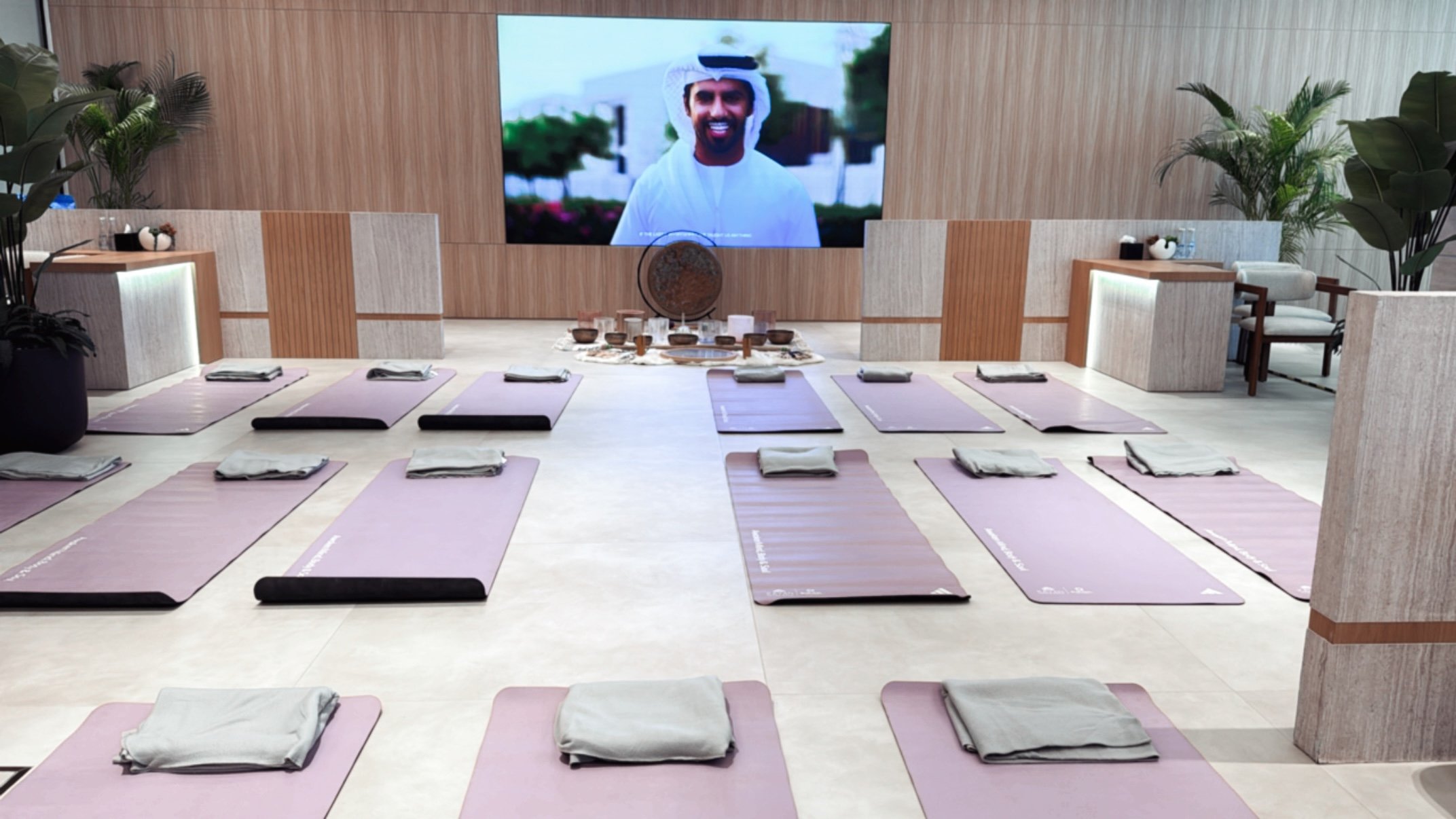
A. Altha's sound bath Dubai and sound bath Abu Dhabi sessions, including the Hypno-Sound Bath, are presented with the same evidence standard used in this article: claiming what current research actually supports, and being transparent where the science is still catching up. Current sessions and wellness events Dubai and Abu Dhabi listings are available at altha.com/events.