The Ducks Joined the Sound Bath: What an Unplanned Visit Taught Us About Lightness
Some sound baths build their meaning through stillness. The one on the evening of Friday, May 22, at Mandarin Oriental Emirates Palace built part of its meaning through an entire family of ducks, who swam directly into the middle of the floating circle, ducklings included, and stayed for the better part of the session. Healing work is often discussed in serious terms, and rightly so. What gets discussed less is how much lightness has to offer the same nervous system that heaviness asks so much of.

What Happened on the Water
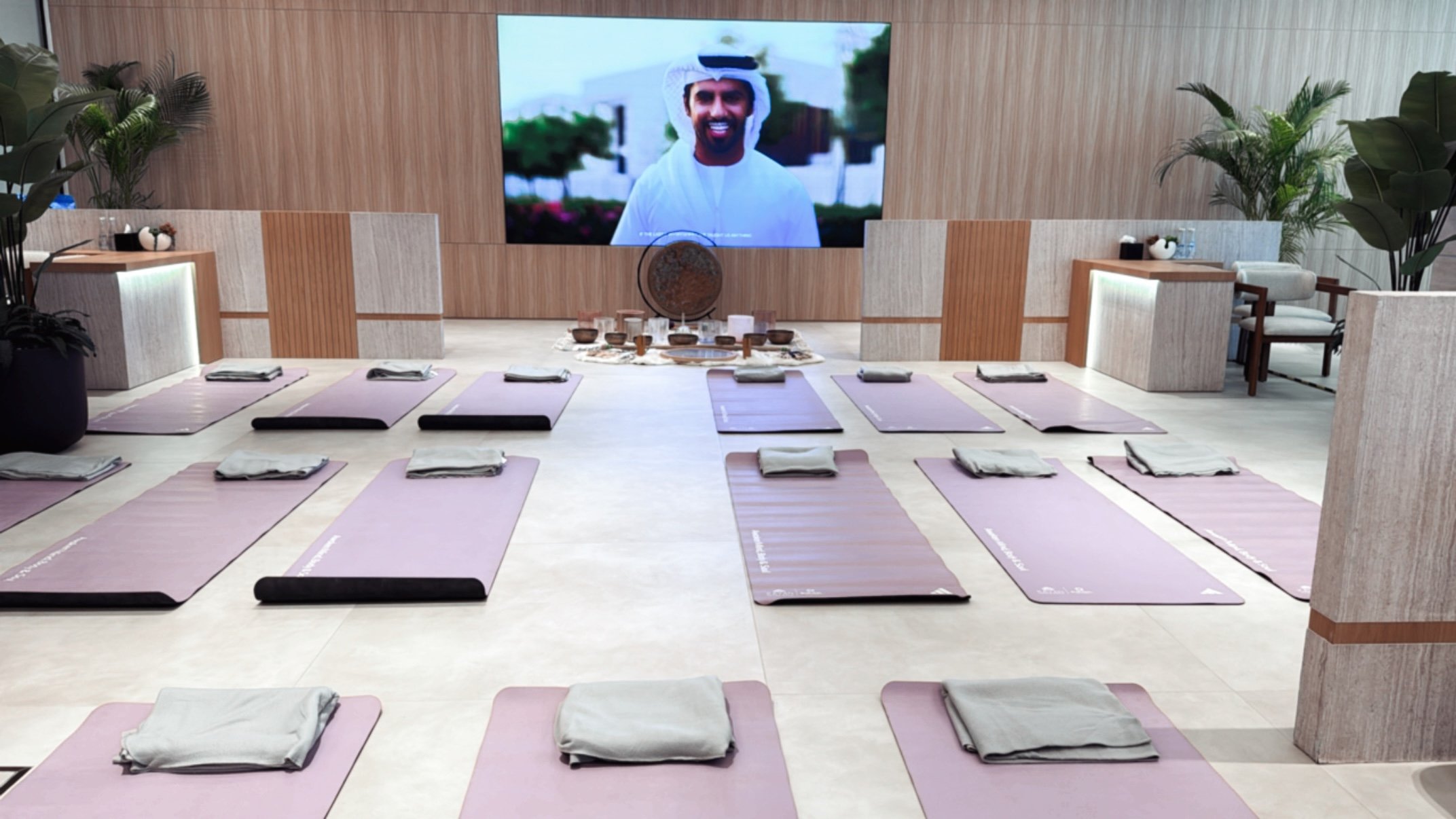
The floating Hypno-Sound Bath, hosted by Altha in partnership with Beyond Wellness at the Mandarin Oriental pool, moved guests through a guided sound journey on individual floating mats, with gongs, singing bowls, and chimes layered over a spoken meditation. Partway through the session, a family of ducks arrived uninvited and swam in among the guests, adding their own sound to the experience. By the time guests were invited to open their eyes at the close of the session, the ducks had gently floated off, having apparently decided the sound bath suited them as much as it suited everyone else.It is the kind of moment no one can plan for, which is precisely what made it land the way it did.
Why Lightness Belongs in Serious Healing Work
Sound healing, hypnotherapy, and somatic practice are often, understandably, framed around processing difficulty: stress, grief, burnout, nervous system overload. That framing is accurate, but incomplete. Play and lightness have their own, separate evidence base for nervous system regulation. Research on adult playfulness has found that people who report higher playfulness also report lower stress levels and use healthier coping strategies. A systematic review and meta-analysis of laughter specifically found a measurable, positive effect on cortisol, the body's primary stress hormone, across multiple controlled studies.
The proposed mechanism is fairly intuitive: genuine lightness, the kind that arrives unplanned rather than performed, tends to engage the parasympathetic nervous system, the body's rest-and-recover state, in a way that is difficult to access through effort or seriousness alone. You cannot force delight. It either lands or it does not, and when it does, the body tends to register it as a real signal of safety rather than a managed one. Some research on play and recovery has also pointed to brief, genuine moments of joy producing a noticeably stronger nervous system response than activities that simply distract without engaging real delight.
A Floating Sound Bath Guest Did Not Expect
Most descriptions of sound bath Abu Dhabi experiences focus, fairly, on the instruments, the water, and the guided stillness. Less discussed is how much these settings remain genuinely alive, outdoors, in real water, sharing space with whatever else happens to be present that evening. A controlled studio environment cannot offer a family of ducks. An outdoor, water-based sound healing session can, and on this particular evening, did.
There is something worth naming in that. Nervous system work does not require a sealed, perfectly controlled environment to be effective. Some of what makes an outdoor sound bath valuable is precisely its openness to the unplanned, whether that is birdsong, wind, water, or, this time, an entire family of ducks deciding to join in.
What's Next
The series continues at Mandarin Oriental Emirates Palace on Friday, June 26, before pausing for the summer and resuming in September. Whether or not the ducks make a return appearance, each gathering carries the same underlying intention: sound, water, and a nervous system given permission to actually rest, lightness included. Full details for upcoming wellness events in Abu Dhabi and in Dubai are available at altha.com/events.




Frequently Asked Questions
-
A. A floating sound bath is a sound healing session where guests lie on individual mats on open water while a practitioner plays instruments like gongs, singing bowls, and chimes from the water's edge or among the floats. The water removes the physical effort of holding your own weight, which tends to deepen relaxation beyond what a typical indoor sound bath offers.
-
A. Yes, and it happened at this one. At the May 22 floating Hypno-Sound Bath at Mandarin Oriental Emirates Palace, a family of ducks, ducklings included, swam into the middle of the session and stayed until guests opened their eyes at the close. Outdoor, water-based venues in Abu Dhabi are genuinely open environments, which is part of what distinguishes them from a studio.
-
A. Play and lightness have their own evidence base, separate from calm or stillness. Research on adult playfulness has linked higher playfulness to lower reported stress and healthier coping strategies, and a systematic review of laughter found measurable reductions in cortisol across controlled studies, both pointing to increased parasympathetic, rest-and-recover nervous system activity.
-
A. The series is held at the Mandarin Beach Club pool at Mandarin Oriental Emirates Palace, Abu Dhabi, in partnership between Altha and Beyond Wellness.
-
A. The series continues on Friday, June 26, before pausing for the summer and resuming in September. Current dates for wellness events Abu Dhabi and Dubai are listed at altha.com/events.