Why Stillness Is a Performance Strategy: The Neurobiology of Recovery
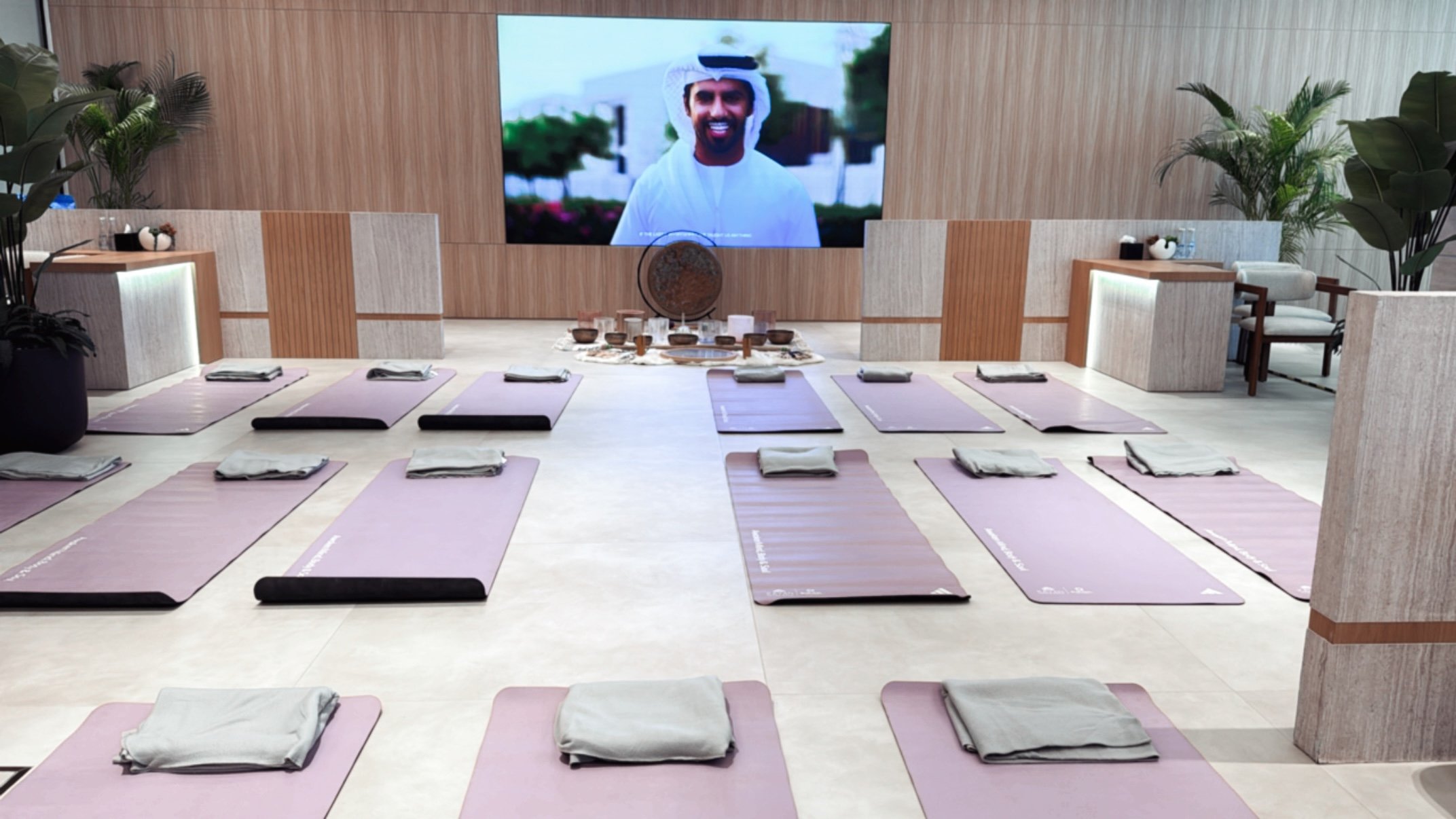
The Marie Claire Arabia Wellness Event unfolded over three days at the Abu Dhabi Equestrian Club, transforming The Arcades into a curated space dedicated to movement, sensory awareness, and integrative health. Designed as a multi-day immersion, the event reflected a clear evolution in how wellness is being defined across the UAE — moving beyond surface-level self-care toward regulation, longevity, and nervous-system health.
As high-performance lifestyles, long work hours, and constant digital stimulation continue to shape life in Abu Dhabi and the wider region, conversations around stress, burnout, and sustainable wellbeing are becoming increasingly relevant. The Marie Claire Arabia Wellness Event responded to this cultural moment by bringing together leaders from fitness, luxury, medicine, and holistic health.

What Happens Physiologically During Recovery
Recovery is not passive. During rest periods following exertion, whether physical training or demanding cognitive work, the body shifts from sympathetic dominance, the alert, output-driving state, toward greater parasympathetic activity, the state associated with restoration. This is not simply a mood shift. It is when the body carries out processes tied directly to future performance: motor neuron recovery, tissue repair, and the replenishment of resources spent during exertion.
Chronic stress measurably interferes with this process. One frequently cited study found that young adults with high chronic psychological stress recovered only about 38 percent of their maximal force output after a one-hour rest period, compared with roughly 60 percent recovery among those with low chronic stress. The rest period was identical. The capacity to actually use it was not. This is a useful, concrete illustration of why stillness functions as a skill and a physiological state, not just unstructured downtime.
Why Not All Rest Works the Same Way
Organizational psychology research has identified psychological detachment, genuinely disengaging mentally from work, as one of the most consistently supported recovery experiences for protecting wellbeing and sustaining performance over time. The distinction is important: being physically away from work while still mentally rehearsing it does not produce the same recovery benefit as actual detachment.
This connects to something researchers call the recovery paradox: people under the highest job stress often have the most impaired ability to detach and recover, precisely when they need it most. High demand does not just create the need for recovery. It can simultaneously undermine the ability to access it, which is part of why stillness has to be built deliberately rather than assumed to happen automatically once the workday ends.
A few patterns worth knowing:
Passive rest is not always restorative. Scrolling a phone or half-watching television while still mentally processing work tasks does not reliably produce the same physiological shift as genuine detachment.
Sleep restriction measurably degrades performance capacity. Research on sleep and physical performance shows that restricted sleep increases physiological strain, elevates heart rate and perceived effort, and impairs glycogen resynthesis, directly undermining next-day output.
More parasympathetic activity is not automatically better. Some endurance research has identified a pattern of parasympathetic overreaching, in which persistently elevated rest-state activity actually reflects unresolved fatigue rather than healthy recovery, a reminder that the goal is a responsive, flexible nervous system, not maximal stillness at all times.
Stillness as an Active Strategy, Not an Absence of Effort
Treating recovery as a deliberate practice changes what it looks like in daily life. A few evidence-aligned approaches:
Build in genuine mental detachment, not just physical breaks. A walk where work is still being mentally rehearsed offers less recovery value than the same walk with attention genuinely elsewhere.
Protect consistent sleep as a performance input, not an afterthought. The research linking sleep restriction to impaired physical and cognitive output is some of the most consistent in this entire field.
Use practices that directly engage the parasympathetic nervous system. Breathwork, sound bath sessions, and other somatic approaches give the body a faster route to the rest-and-recover state than simply stopping work and hoping the body follows.
Notice when stillness itself becomes effortful. If rest consistently fails to feel restorative, that is worth treating as a signal, not a personal failing.
Stillness, understood this way, is not the opposite of performance. It is one of its prerequisites, with a real physiological mechanism behind it. The nervous system that knows how to genuinely downshift is the same one capable of sustained output over time, and that capacity is something that can be deliberately built, not simply hoped for.






Frequently Asked Questions
-
A. Time off and genuine recovery are not the same thing. If attention is still mentally rehearsing work during downtime, the body does not reliably shift into the parasympathetic, restorative state that produces real recovery. Research on chronic stress has also found it measurably reduces how much capacity the body can actually recover during a given rest period.
-
A. It is measurable. One study found that after an identical one-hour rest period, individuals with high chronic stress recovered only about 38 percent of their maximal force output, compared with roughly 60 percent among those with low chronic stress. Stress does not just feel draining; it physiologically limits how effectively rest periods work.
-
A. It depends on whether genuine mental detachment is happening. Passive activities like scrolling do not reliably produce restorative effects if attention is still occupied by work-related thoughts. Psychological detachment, actually disengaging mentally, is one of the most consistently supported recovery experiences in the research.
-
A. In some cases, yes. Endurance research has identified a pattern called parasympathetic overreaching, where persistently elevated rest-state nervous system activity can actually reflect unresolved fatigue rather than healthy recovery. The goal is a nervous system that can shift states appropriately, not maximum stillness at all times.
-
A. Consistent sleep, genuine psychological detachment from work, and practices that directly engage the parasympathetic nervous system, such as breathwork, sound bath sessions, and other somatic approaches, all have research support for accelerating the shift into a restorative state, rather than waiting for the body to get there unassisted.