What Ten Years at Ferrari Taught Me About Identity, Burnout, and Why I Built the Altha Collective
I spent eighteen years in corporate luxury before I became a sound healer. Ten of those years were at Ferrari, then I built my own agency producing events for brands like Pagani and Lamborghini. From the outside, it looked like everything was working. From the inside, I had quietly stopped being a person and become a job title.

What Eighteen Years in Corporate Taught Me
I loved planning events. I loved designing spaces where people could feel something real, even inside a corporate setting. That part was genuine. But underneath it, my drive was not only about the work itself. Part of it was external validation, the title, the recognition, the sense of being someone because of what I did. I protected that identity the way you protect something central to who you believe you are, even as the pace and pressure of the work were making me sick.
The body keeps score long before the mind admits anything is wrong, and mine eventually forced the conversation I had been avoiding. I came to understand, slowly rather than all at once, that I am not my job, not my title. I am a human being, and that, on its own, is already enough. That understanding eventually led me to sound healing and hypnotherapy, and to becoming a Board-Certified Clinical Hypnotherapist working at the intersection of both
Why I Believe a Larger Shift Is Coming
I think what happened to me is about to happen to more people, for a structural reason rather than a personal one. Goldman Sachs research estimates that roughly 300 million jobs globally have tasks exposed to AI automation, though the firm is clear that most of these are partially affected, not eliminated outright, and that new categories of work are likely to emerge alongside the disruption. A separate, earlier analysis from McKinsey estimated that 400 to 800 million people worldwide could need to change occupations by 2030 under rapid automation adoption, requiring large-scale retraining rather than simply job loss.
Even with reasonable caveats, that is still a significant number of people whose sense of identity, tied tightly to a job title, may be challenged in the coming years. Research on unemployment and economic disruption consistently links job loss to increased psychological distress, beyond the financial strain alone. The disruption is not only economic. It is existential, for anyone whose sense of self has become inseparable from a role.
What I Saw at the Museum of the Future
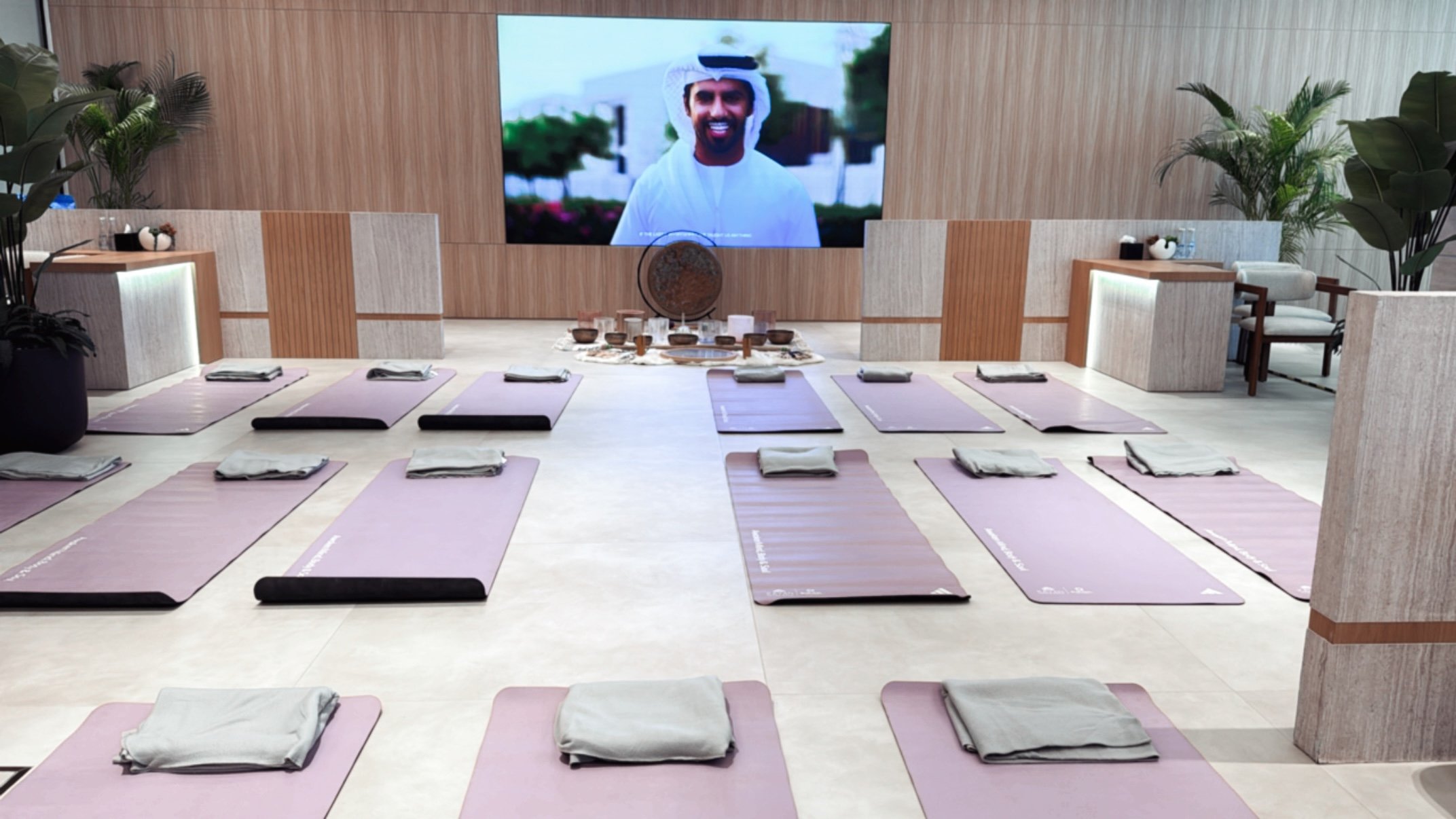
A few months ago I visited the Museum of the Future in Dubai, which has an exhibit on future professions. Among the roles listed was Director of Sound Therapy. Seeing a healing modality named that plainly stayed with me. It is one institution's projection, not a guarantee, but it reflects something I already believed: as more tasks become automated, the work of helping people return to their bodies and their sense of self does not get easier to replace. If anything, it becomes more necessary.
Why I Built the Altha Collective
I cannot personally hold space for everyone who will need this kind of support ahead. No single practitioner can. So I built the Altha Collective to train and support healers, sound practitioners, yoga teacher, breathwork facilitators and hypnotherapists who want to work seriously with corporate and high-performing clients, not as a side hobby, but as a sustainable practice.
The Collective covers the parts of this work that healing training alone rarely includes:
How to price and structure sessions for corporate and high-performing clients
How to approach companies, hotels, and organizations without an existing network
How to hold your value as a practitioner without diluting the integrity of the work
How to build a steady, repeatable practice rather than relying on one-off bookings
Ongoing community and support from other practitioners doing the same work
My own path went from corporate luxury events to sound healing and hypnotherapy, applying everything I had learned about pricing, positioning, and working with corporate clients to a practice I had previously only valued as a personal passion. The Collective exists because that path should not have to be reinvented alone by every practitioner who walks it.
The Part I Cannot Do Alone
If a thousand healers each support a thousand people through this transition, that is a million people who get help finding their way back to themselves before, rather than after, a crisis forces the question. That scale only works as a collective effort, built around practitioners supporting practitioners, not one person trying to reach everyone alone.
If you are a healer, sound practitioner, or hypnotherapist building a practice that can actually sustain you, the Altha Collective was built with exactly that in mind.






Frequently Asked Questions
-
A. The Altha Collective is a training and business support program for healers, sound practitioners, and hypnotherapists who want to build a sustainable, professional practice, including work with corporate and high-performing clients. It focuses on the business and practical side of healing work, alongside community support from other practitioners.
-
A. It is built for practitioners across modalities, including sound healing, somatic therapy, hypnotherapy, reiki, yoga, breathwork and other somatic or energy-based practices, who already have training in their craft but want support with pricing, outreach, and building a consistent, professional client base.
-
A. No. A significant part of the Collective is built specifically for practitioners who do not have existing corporate connections, covering how to identify, approach, and build relationships with companies, hotels, and organizations from the ground up.
-
A. While sound healing and hypnotherapy are Letizia's own areas of expertise, the business principles taught in the Collective apply across modalities. Practitioners working in breathwork, somatic therapy, and other healing disciplines are part of the community.
-
A. Visit our instagram account @thealthacollective or click here (link to: https://thealthaacademy.com/vsl-collective/?utm_source=ig&utm_medium=social&utm_content=link_in_bio&...) for current details on the Altha Collective, including how to apply and what is involved in the program.